
AI Keyword Optimisation For Global Campaigns
Why global keywords break — and how AI actually helps
Running campaigns across countries sounds simple until you hit the keyword problem.
What works in one market quietly fails in another. Not because the product is wrong — but because people search differently, even when they speak the same language.
AI isn’t changing global marketing by being “smarter tech”. It’s changing it by removing the guesswork marketers have been patching together for years.
The real problem with global keyword research
Same language, different intent
A keyword doesn’t travel as well as we think it does.
- People in the UK search for “trainers”
- People in the US search for “sneakers”
- Same product, totally different behaviour
The issue isn’t translation — it’s intent. Traditional keyword tools often treat these as equivalents, when they’re not. This happens constantly:
- “Estate agent” vs “realtor”
- “Car hire” vs “car rental”
- “Optimisation” vs “optimization”
When campaigns miss these differences, ads still run — but relevance drops, clicks get more expensive, and conversions quietly slide.
Culture changes what people are willing to search
Some words technically translate, but culturally don’t land.
In Japan, searching for “cheap” can imply low quality. Users often look for phrases that signal value instead. A direct translation may attract traffic — but the wrong kind.
This is why global campaigns fail even with solid budgets. It’s not a lack of spend. It’s language without context.
What AI actually does differently (without the buzzwords)
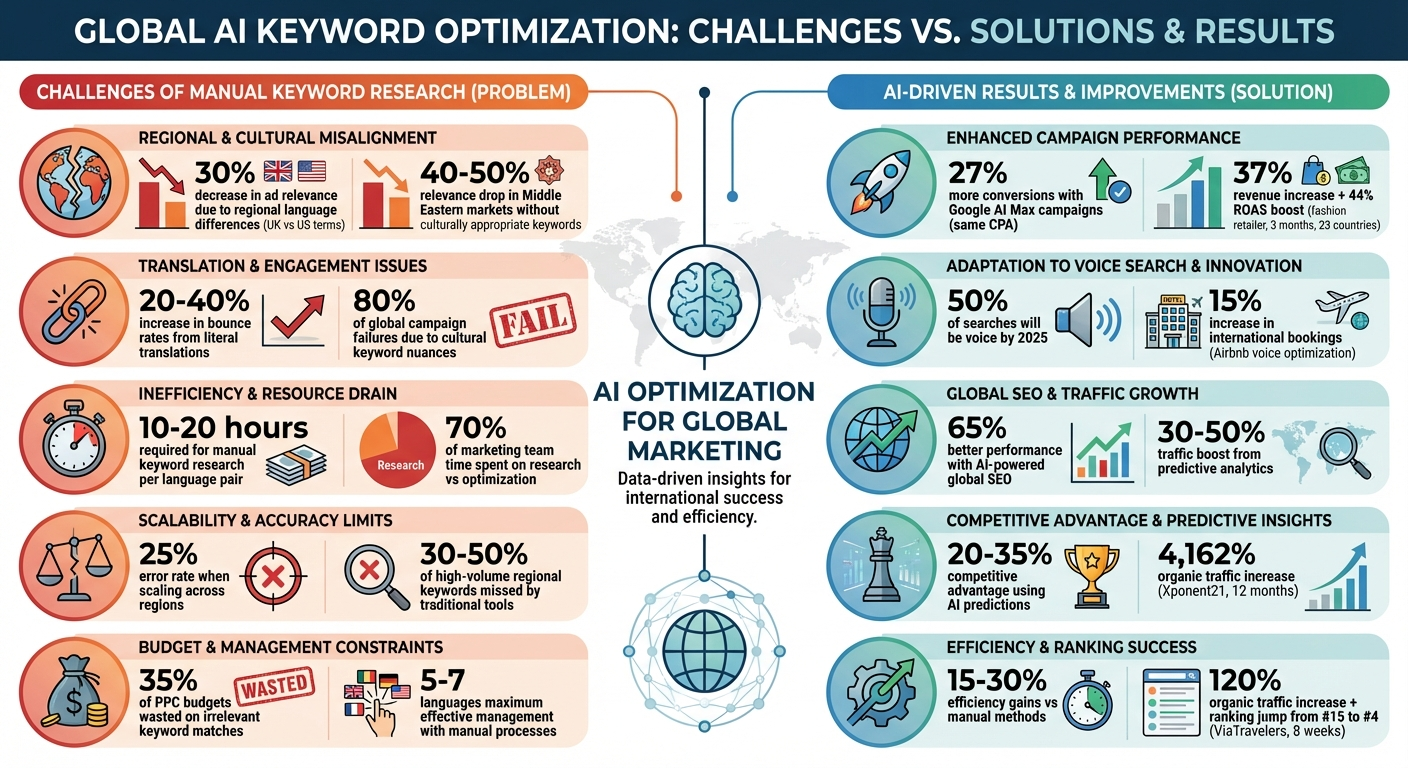
AI doesn’t just generate more keywords. It looks at how people search, not just what they type.
It focuses on intent, not wording
Instead of matching words literally, AI groups searches by meaning.
So it understands that:
- “Car hire”
- “Car rental”
- “Voiture de location”
…are different expressions of the same need.
That means campaigns don’t rely on perfect translations — they align to what users actually want in that moment.
It finds local, specific searches humans miss
People don’t always search in neat, brand-friendly phrases.
They search things like:
- “Best gluten-free fish and chips near me”
- “Affordable electric bike for commuting in London”
- “Quiet café with WiFi open late”
AI pulls these long, specific searches from search data, social platforms, and local forums — places most marketers don’t manually check.
These keywords:
- Cost less
- Convert better
- Reflect real behaviour
Why this matters for paid campaigns (PPC)
Global paid campaigns used to rely on fixed keyword lists and manual optimisation.
AI flipped that.
Now:
- Budgets move automatically toward what’s converting
- Underperforming keywords pause without waiting for reports
- New high-intent searches get picked up as they appear
Instead of guessing which keywords might work in a market, AI reacts to what is working right now — by location, language, device, and timing.
The result isn’t magic. It’s fewer wasted clicks and faster learning across regions.
Why it also matters for SEO (not just ads)
SEO suffers from the same problem as PPC: content written for how we think people search, not how they actually do.
AI helps by:
- Grouping keywords into real topics instead of lists
- Aligning content to search intent, not exact phrases
- Adapting language to local habits without rewriting everything manually
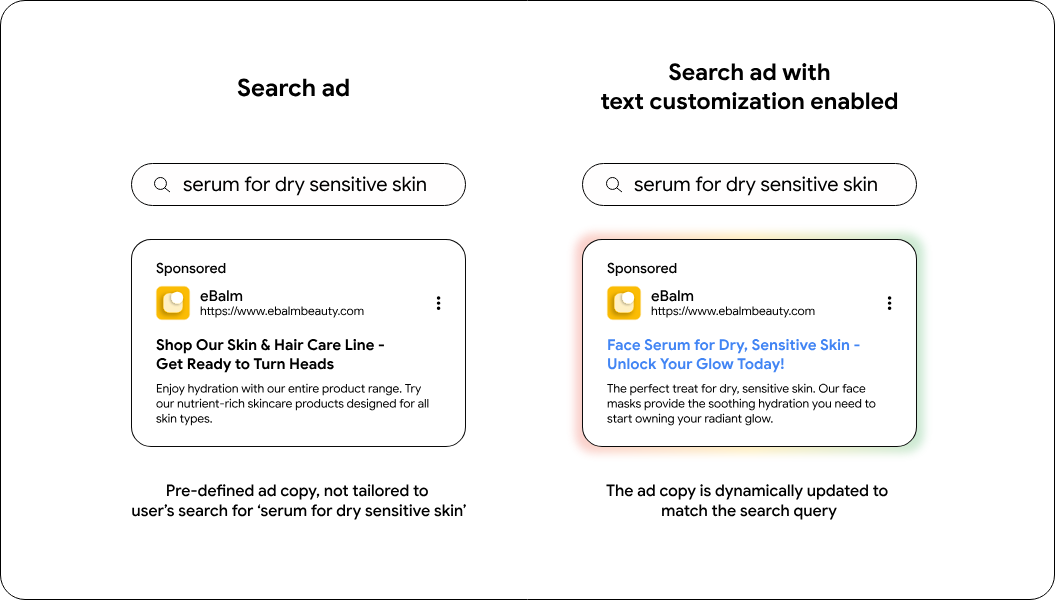
For instance, Google's AI Max for Search campaigns reportedly achieve 27% more conversions while maintaining a similar cost per acquisition compared to campaigns that primarily use exact or phrase match criteria
Scaling globally without losing relevance
The biggest advantage of AI isn’t speed. It’s consistency at scale.
As campaigns expand:
- Search behaviour changes
- New trends appear
- Voice search grows
- Local phrasing evolves
Voice Search and AI in Multiple Languages
Voice search is on track to make up over 50% of searches by 2025 in several markets. This trend introduces unique challenges for multilingual campaigns, particularly when dealing with diverse accents and conversational queries that vary significantly from typed searches.

A great example of this is Airbnb. They utilised AI-driven localisation to optimise content for voice search across non-English-speaking markets. Their approach, which focused on tailoring descriptions to regional accents and conversational search intents, led to a 15% increase in international bookings. This success highlights that voice optimisation goes beyond simple translation; it’s about capturing how people naturally speak in different regions.
Conclusion and Key Takeaways
AI-driven keyword optimisation is changing the game for global marketing campaigns by offering unmatched efficiency and scalability. By automating tasks like keyword research and integration, teams can shift their focus to strategic planning while AI handles the heavy lifting. This includes processing massive multilingual datasets in real time, uncovering intent-based and long-tail keywords that might otherwise be overlooked, and ensuring consistent messaging across different markets.
In the SEO world, AI-powered tools like semantic analysis and topic clustering help create content that aligns better with user intent, leading to improved click-through rates and lower bounce rates. On the paid search side, dynamic bid management takes efficiency to a new level by reallocating budgets in real time to high-performing keywords, all without inflating costs.


23.png)


