
ChatGPT is now an ad platform. Here's what DTC brands should know
ChatGPT is now serving ads and self-serve access opens in April. Here's what the product is, how it differs from Google and Meta, and what DTC brands should do before committing any budget.
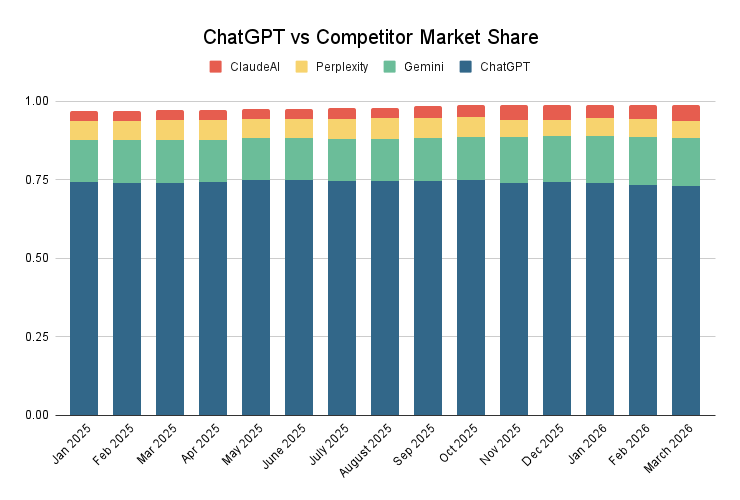
ChatGPT crossed $100 million in advertising revenue this week. That's not large relative to
Google ($237 billion) or Meta ($135 billion) last year, but it's early — and OpenAI is opening
self-serve access to all advertisers in April.
For DTC brands, the question isn't "should we be there on day one?" It's: what is this
product, how does it actually work, and what do we need to understand before committing
any budget to it?
What ChatGPT's ad product actually is
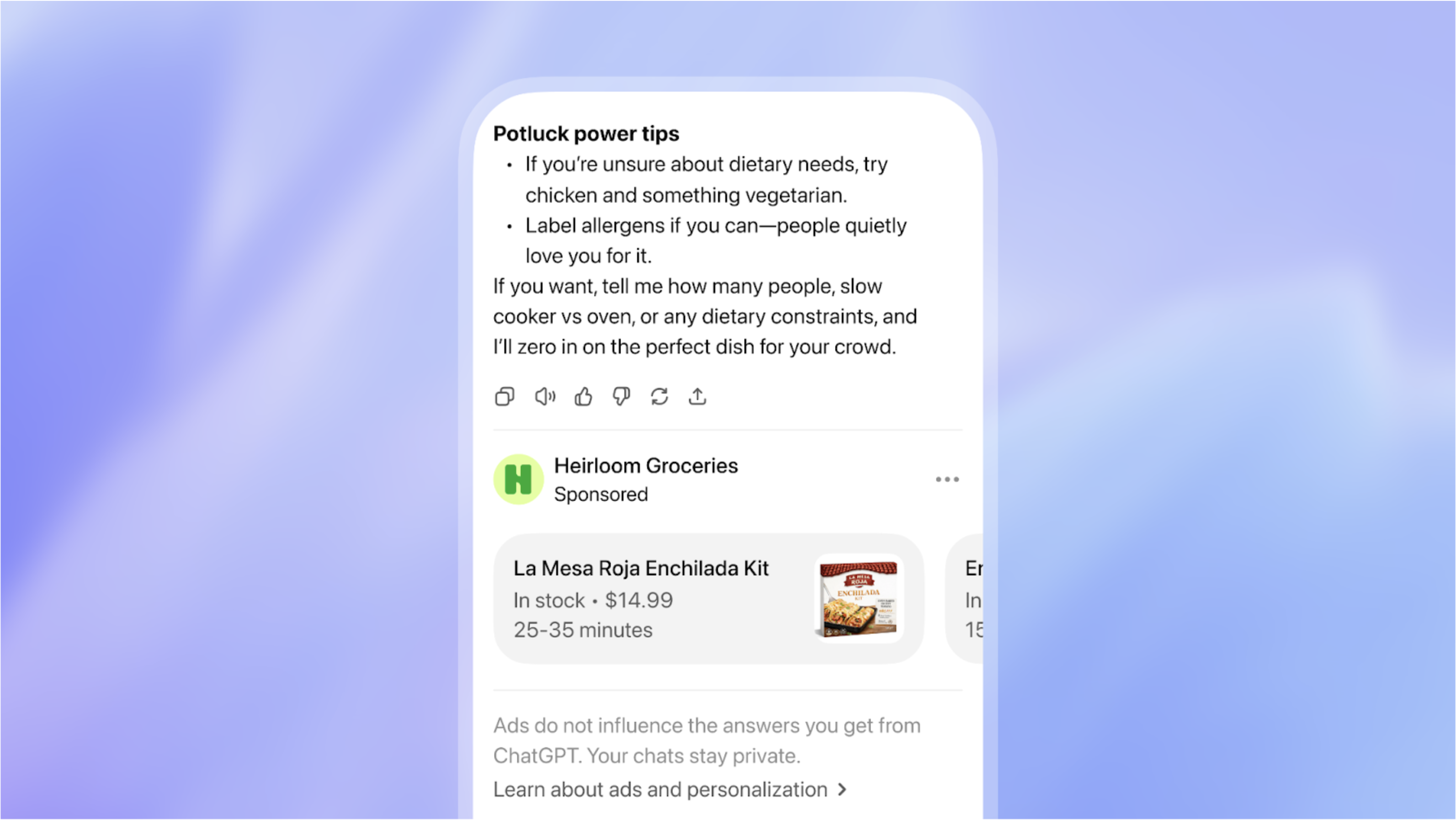
Based on what OpenAI has disclosed and what early advertisers have reported, ChatGPT
ads are served contextually within conversations. When a user asks something relevant to a
product or service, a sponsored result appears alongside the AI's response. The format is
closer to a native recommendation than a traditional paid search unit.
This is meaningfully different from Google Search. There's no keyword bidding in the
traditional sense — OpenAI's system decides when an ad is relevant based on
conversational context. Advertisers set campaign objectives and provide creative; the
platform handles placement.
It's also different from Meta. There's no social graph, no demographic targeting built from
platform behaviour, no creative carousel. The signal is entirely intent-driven — what the user
is asking right now, in full sentence form.
Why this is more relevant to DTC than B2B
ChatGPT's user base skews toward high-education, high-income individuals who use AI
tools to research and make decisions. For B2B, that's an interesting audience — but the
purchase cycle is typically too long for the platform to demonstrate direct attribution clearly.
For DTC, particularly in categories where purchase decisions involve research and
comparison (beauty, supplements, apparel, homeware), the intent signal is much cleaner.
A user asking ChatGPT "what's the best magnesium supplement for sleep" is in a
consideration-to-purchase mindset. That's the audience DTC brands spend heavily to reach
on Google and Meta — often with more friction and at higher CPCs.
What the early signals suggest
Early adopters have reported that ChatGPT ads are generating reasonable click-through
rates, but that attribution is murky — as you'd expect from a new platform with limited third-
party measurement integrations. There's no confirmed native GA4 integration, UTM
parameters pass through but session data is inconsistent, and view-through attribution isn't
yet available.
This matters more than it might seem. If you can't measure it properly, you can't optimise it.
The first wave of advertisers on any new platform tends to overpay because they're buying
novelty and positioning rather than measured return. That's a reasonable business
calculation for some brands — but it should be a conscious choice, not a default.
Three questions to answer before committing budget
1. Can you measure the conversion properly?
Before spending anything, confirm that UTMs pass through correctly to your analytics stack,
that you can attribute sessions from ChatGPT in your data, and that conversion tracking fires
on the pages users land on from the ad. If you can't measure it, the test has no value.
2. Is your product category right for conversational placement?
Products where the purchase decision involves research and comparison are a better fit than
impulse purchases. If your DTC product benefits from comparative context — supplements
vs. alternatives, a specific fabric technology, a skincare formulation — conversational
placement is a natural fit. If you sell an impulse item where visual creative drives conversion,
Meta still wins this.
3. What does success look like before you start?
"Being on a new platform" isn't a test hypothesis. Define upfront what result would justify
continued spend: a CPA within 30% of your Meta benchmark, a conversion rate above a
specific floor, a ROAS target for the test period. Without a pre-defined benchmark, you're
spending without accountability rather than running a test.
What to watch before April
OpenAI hasn't published a full advertiser guide yet. Before self-serve goes live, three things
are worth monitoring: which verticals early advertisers are reporting traction in; whether third-
party measurement integrations (GA4, Triple Whale, Northbeam) confirm session attribution;
and what minimum spend thresholds look like — new platforms sometimes have floors that
make small-scale testing impractical.
What to do this week
1. Set a reminder for April to review the self-serve launch. Don't pre-allocate budget now —
wait until you can see the full product spec.
2. Make sure your UTM tagging is consistent and your GA4 or measurement stack is set up
to attribute "chatgpt.com" as a traffic source. It's already referring organic traffic to some
brands.
3. If you're in a research-led DTC category (supplements, beauty, homeware, apparel), brief
your team on the platform now so you're not making reactive decisions in April.
4. Don't pull budget from Google or Meta in anticipation. ChatGPT ads are worth testing as
incremental spend — not as a replacement channel.
FAQ
Should we pause Google or Meta budget to test ChatGPT ads?
No. New platforms require incremental test budget, not reallocation from proven channels. Until ChatGPT ads demonstrate a measurable return in your specific category, treat it as an experiment budget line — not a channel swap.
How is ChatGPT's ad targeting different from Google's AI-powered search ads?
Google's ads are served in a traditional search results interface with keyword-level bidding and established measurement infrastructure. ChatGPT ads are served natively within conversation responses, with no keyword bidding and limited third-party measurement at this stage. The intent signal is similar — both catch users in active research mode — but the mechanics and measurement maturity are fundamentally different right now.


23.png)


